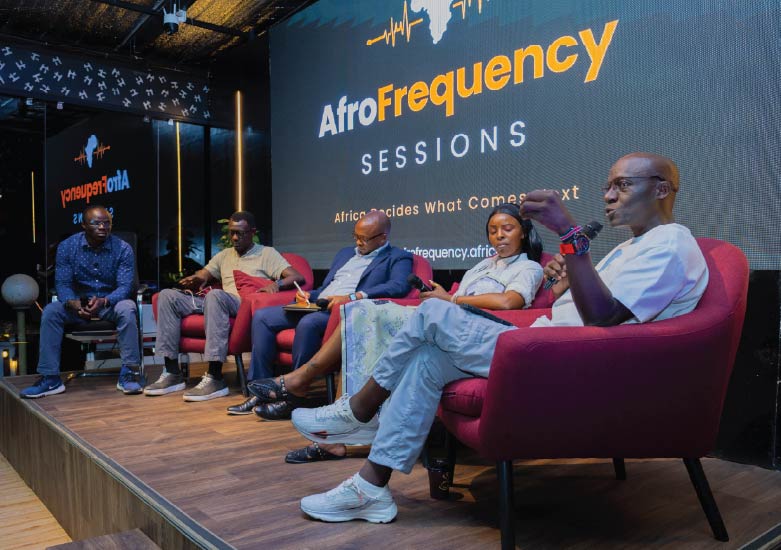
NAIROBI – October 24 -- A woman in Nairobi asked an AI chatbot whether it was taboo for her husband to bathe in the same bathroom her parents use. The machine told her it was fine. "But in our Luo culture, it's wrong," she later told researchers. Her small complaint became the quiet thesis of an evening hosted by AfroFrequency, where technologists, creatives and an unusually restless audience asked what happens when AI speaks our languages without sharing our values.
The story came from Mark Kaigwa, founder of the research firm Nendo, whose study of how Kenyans use AI found that roughly one in four respondents felt they had received advice that was wrong for Kenyan culture. Yet the same research is full of improvisation. Chama chairladies who once kept records by hand now photograph their books to hold members to account. A young man in Machakos told the researchers that free access to AI was "just like paying for an MIT course in real life". Kaigwa's advice was to use AI "as a coach, not a crutch".
Philip Thigo, Kenya's special envoy on technology, pushed the point further. A chatbot that answers in fluent Kiswahili or Kikuyu, he argued, has logic but no soul, and its logic may not be your culture. The danger comes when people hand over their original thinking, asking a machine to write a speech rather than to sharpen five points they drafted themselves. At that moment, he said, the assistant becomes the principal. His remedy was a shift from AI literacy to AI fluency, an understanding of where the technology is heading rather than how to use this month's version of it.
Fluency matters most with Kenya heading towards the 2027 general election. Kaigwa described what he called hostile activism, in which people knowingly share false content because it wounds a side they dislike. He also argued that Kenyans are less rational consumers of information than they like to believe, and that since the June 2024 Finance Bill protests, many have vented political anger at brands rather than at government, a risk companies must now price in. Yet he sees a movable middle of voters still open to persuasion, and warned against assuming the information war is already lost.
One discussant pressed the sovereignty question arguing that Kenyans pour political questions and personal details into chatbots owned by foreign companies without weighing the consequences, and reminded the forum of the Cambridge Analytica scandal in the 2017 elections. How do Kenyans keep their elections their own? Nobody claimed a full answer, though Thigo's call for an African technology ecosystem, rather than countries working in silos, came closest.
For creatives, Tabitha, the panel's youngest voice, offered a revealing confession. She had walked out of a Nairobi entertainment spot because the music sounded machine made, while her friends happily danced on. Audiences, she conceded, often like AI content. Starting out today, she said, she would still become an artist and still use AI, but she would document how much of each work was hers, and she would learn intellectual property law before signing anything. Others in the room asked whether Kenyan musicians whose voices may have trained such models will ever be paid.
A media entrepreneur from Uganda reported that AI written content on his publishing platform now roughly matches human writing, with readership largely unchanged. An investor had told him that writing is dead. Kaigwa disagreed, arguing that writing is thinking and that the habit of putting thoughts on paper deserves protection.
The most moving interventions came from people the market often overlooks. One participant with a visual impairment uses AI to read documents. Another speaks through an AI generated voice because few other options exist. Thigo's response was blunt. Global firms do not see persons with disabilities as a lucrative market, he said, which is precisely why Africans must build such tools themselves.
On jobs, Thigo repeated that people will be displaced less by AI than by those who use it well. He urged universities to teach students to use AI rather than ban it, and lawyers to prepare for intellectual property disputes that have no precedent. On loneliness, the panel disagreed openly. Tabitha credited chatbots with comforting people in distress while demanding that companies be held responsible when their models cause harm. Thigo rejected emotional reliance on machines altogether, warning against giving human attributes to systems that do not feel.
Kaigwa closed with a demonstration rather than a speech. His agency had produced a television commercial pitch for an insurer with AI generated voices, characters and locations, though the dialogue was written by humans because the machine's version fell short. He also noted a global client that insists on human casts and crews precisely to protect local jobs. Both choices, he suggested, can coexist.
The organisers promised a follow up session on intellectual property. That may be the right next step. If the evening proved anything, it is that Africans are already deep inside the AI economy, working, voting and even dating with it. The open question is whether the continent will teach these systems its values, or quietly adopt theirs.
AfroFrequency is a pan African movement placing African culture, imagination and lived experience at the centre of technology debates.